A letter from Matria
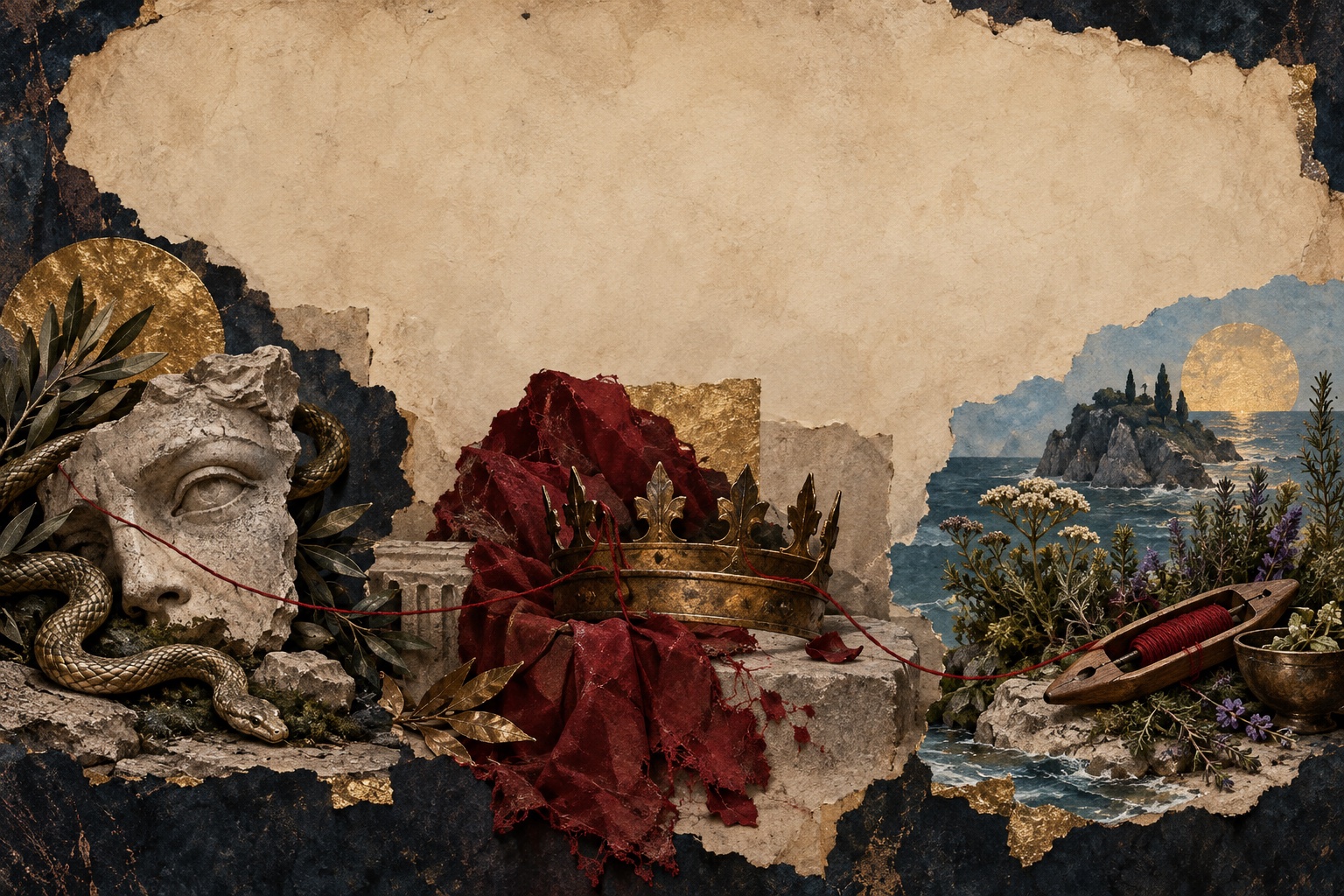
Who gets to tell the myth?
Medusa, Clytemnestra and Circe have been described by other people for centuries. Three novelists hand each woman the centre of the page.
These are works of fiction, not evidence that one ancient version is the definitive one. Read together, they ask how a reputation is made, who benefits from it, and what changes when the woman at its centre becomes the narrator.
I, Medusa
Gray begins before the familiar monster story. Her Medusa, called Meddy, wants a life beyond her family island. Athena's temple appears to offer purpose, until divine power changes the course of her life. The novel follows what happens when someone else controls the account of her transformation. Read the publisher's book description.
Read it for: a first-person origin story that keeps the person behind the feared image in view.
About the author: Gray is a speculative-fiction writer and the author of the Beasts of Prey trilogy. I, Medusa is her first adult novel. Read her biography.
Clytemnestra
Casati follows a Spartan woman who becomes queen of Mycenae and whose name is often attached to a single act of revenge. The novel gives room to her family ties, choices and losses before that act. It neither erases violence nor lets one judgment stand in for a whole life. Read the publisher's book description.
Read it for: a portrait of power and grief that keeps the consequences of revenge in the frame.
About the author: Casati studied Ancient Greek and its literature in northern Italy before working as a screenwriter and journalist. Clytemnestra was her debut novel. Read her publisher biography.
Circe
Miller takes the figure encountered by Odysseus and gives her a life beyond his visit to her island. Exile, craft, desire and motherhood unfold over her own long span of time. Circe's powers remain strange, but the novel asks what it means to see those powers from inside her life. Read the author's book page.
Read it for: the space it gives a woman often introduced only as an obstacle in a hero's journey.
About the author: Miller studied Latin and Ancient Greek at Brown University and taught both subjects. Circe followed her debut novel, The Song of Achilles. Read her biography.
A reading constellation
The lines below are Matria's editorial comparisons. They show related questions across the novels, not a claim that the authors influenced one another or that the ancient figures shared one story.
Swipe across the graph to read each connection.
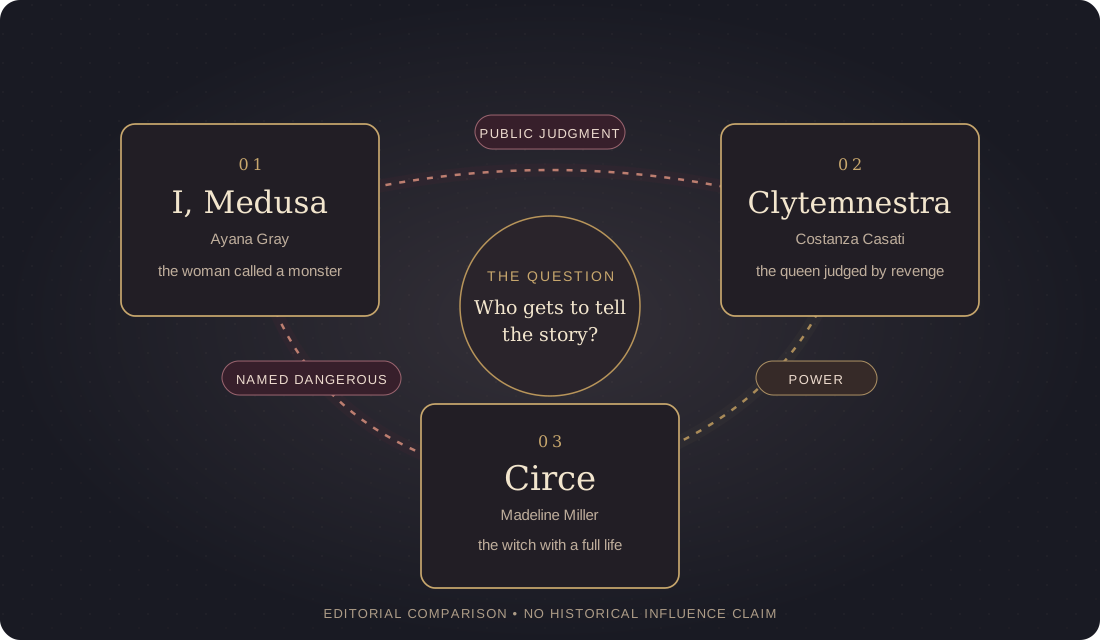
- Public judgment: what remains of a woman when one label stands for her whole life?
- Power: what can a woman do with power inside a world that limits it?
- Named dangerous: whose fear turned a woman's capacities into a warning?
Choose the voice you want to hear first. Gray begins with a young woman made monstrous. Casati returns to a queen before and after the deed used to define her. Miller follows a woman whose life continues long after a hero sails away.
Matria's question: Which version of a woman have you inherited, and whose telling have you never heard?
Books and author sources
Read the book pages and author interviews behind this recommendation.
- I, Medusa, Random House book page, 2025.
- Interview with Ayana Gray, Geeks OUT, 2025.
- Clytemnestra, Penguin book and author page, 2023.
- Q&A with Costanza Casati, Penguin Random House South Africa, 2023.
- Circe, Madeline Miller's book page, 2018.
- Q&A with Madeline Miller, Women's Prize, 2018.
Content note: these novels include sexual violence, coercion and family violence. The short quoted lines above come from author interviews, not from the novels or ancient texts. The artwork is original symbolic illustration, not archive evidence.